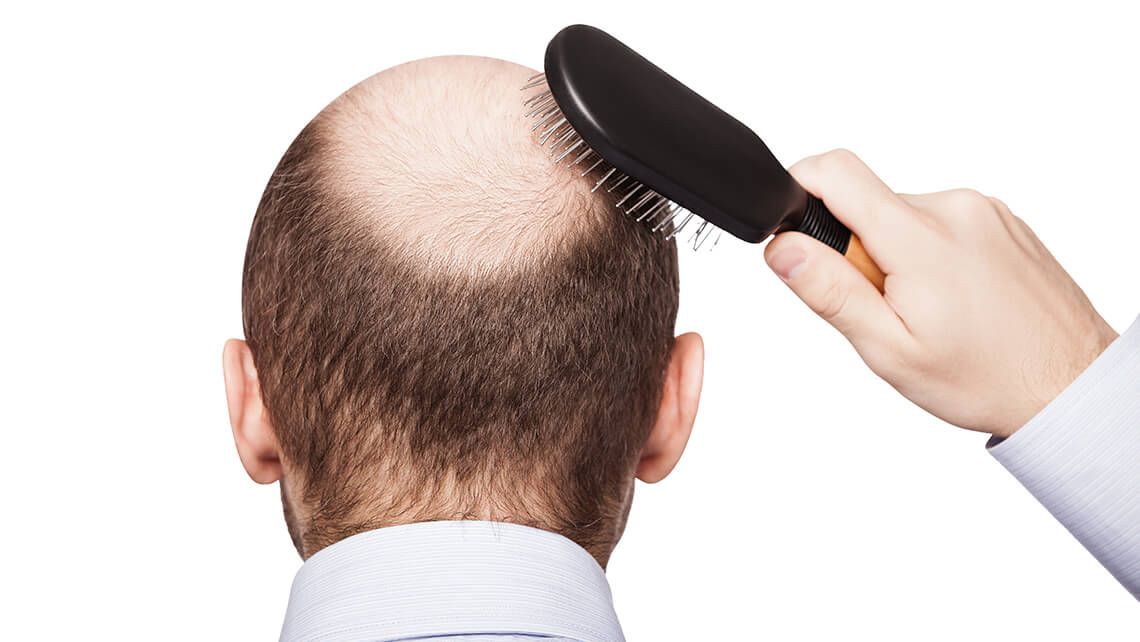
In short
In a hair transplant, hormone-resistant follicles from the back and sides of the scalp are extracted one by one (FUE) and placed into tiny channels in bald or thinning areas. It is done under local anaesthesia and takes several hours to a day depending on the area. Transplanted hairs shed within 2–4 weeks, start to regrow at 3–4 months and the final result is seen at 12 months.
- Anaesthesia
- Local
- Duration
- 4 – 8 hours
- Crusts fall off
- 7 – 10 days
- Final result
- 12 months
Why does hair fall out?
The most common cause is androgenetic (male-pattern) hair loss. Follicles at the back of the scalp are resistant to this process, which is why they keep growing after transplantation.
How is it performed?
Follicular units are extracted from the donor area with micro-punches, then implanted at the correct angle and density into the recipient area. The hairline is designed according to facial proportions and age.
Timeline after transplant
- Day 2–3: first wash
- Day 7–10: crusts fall off
- Weeks 2–8: transplanted hairs shed (shock loss)
- Months 3–4: new hair starts to grow
- Month 12: final result
Frequently asked questions
Is the result permanent?
Transplanted follicles are resistant to hair loss and are permanent.
Is a hair transplant painful?
Local anaesthesia makes the procedure comfortable; mild soreness may follow.
How many grafts do I need?
It depends on the area and donor density; this is determined at the consultation.
Can women have a hair transplant?
Yes, after the cause of hair loss has been investigated.
Can beard and eyebrows be transplanted?
Yes, with the same technique.
Will there be scars in the donor area?
FUE leaves tiny dot scars that are hidden under short hair.
How long should I stay in Ankara?
Usually 2–3 days.
When can I go back to work?
Usually after 3–5 days.
Is there an age limit?
It is usually recommended after the pattern of loss becomes clear, generally after 25.
Will I need a second session?
Possibly if loss is extensive or continues in other areas.
This page was prepared by Prof. Dr. Serdar Öztürk. Last updated: .
 Nose
 Nose
 Nose